Speakers
Jim Sullivan
Professor of Economics, Co-founder and Director, Wilson Sheehan Lab for Economic Opportunities and Director, Notre Dame Poverty Initiative, University of Notre Dame
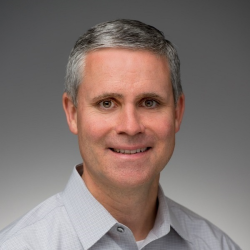
Jim wears many hats as the Academic Director and co-founder of LEO. He focuses his attention on leading research teams that are examining the impact of innovative programs, exploring new partnerships between researchers and service providers, and strategizing about how LEO can broaden its impact on the world. Jim is a Professor of Economics at Notre Dame. In addition to teaching undergraduate and graduate economics courses, he serves on the National Poverty Center Advisory Board and is a member of the U.S. Commission on Social Impact Partnerships. He received his BA in Economics from Notre Dame and his PhD in Economics from Northwestern University. Today, Jim studies poverty and inequality measurement and the impact of domestic anti-poverty programs, particularly those that aim to improve housing stability and labor market outcomes.
Rev. Edward A. Malloy, C.S.C.
University of Notre Dame president emeritus and a member of the National Center on Addiction and Substance Abuse board of directors

Rev. Edward A. Malloy, C.S.C., completed his 18th and final year as president of the University of Notre Dame on July 1, 2005. He now serves as President Emeritus. As the University’s 16th president, Father Malloy was elected by the Board of Trustees in 1986, having served five years as vice president and associate provost. Father Malloy is a full professor in the Department of Theology and has been a member of the faculty since 1974. As President Emeritus, he continues to teach, conducting a seminar for first-year undergraduates each semester, and he makes his home in a student residence hall on campus.
He is the author of more than 50 articles and book chapters, the editor or co-editor of two books, and has published twelve books. An ethicist by training, he is a member of the Catholic Theological Society of America and the Society of Christian Ethics.
Father Malloy led Notre Dame at a time of rapid growth in its reputation, faculty, and resources. The University has seen a dramatic improvement in its financial aid resources, in the quality of its campus facilities, and in the diversity of its student body and faculty. It has fostered its distinctive identity as a Catholic university while gaining the recognition of its peer institutions, Catholic and non-Catholic alike.
Father Malloy earned his doctorate in Christian ethics from Vanderbilt University in 1975. He earned bachelor’s and master’s degrees in English from Notre Dame in 1963 and 1967, and a second master’s degree, in theology, in 1969 while studying for the priesthood. He was ordained to the priesthood in Sacred Heart Basilica on campus in 1970.
Father Malloy also played a leadership role in efforts to promote community service and combat substance abuse. In combating substance abuse, Father Malloy has been a member of the National Advisory Council on Alcohol Abuse and Alcoholism, President Bush’s Advisory Council on Drugs, the Community Anti-Drug Coalitions of America, the Governor’s Commission for a Drug-Free Indiana, and is currently a member of the board of the Partnership to End Addiction, (formerly National Center on Addiction and Substance Abuse and Center on Addiction) at Columbia University, for which he has chaired a number of commissions, particularly dealing with substance abuse among adolescents and among college and university students. He has also been co-chair of a major study on college drinking for the National Institute on Alcohol Abuse and Alcoholism.
David B. Go
Vice President and Associate Provost for Academic Strategy, University of Notre Dame

David Go is vice president and associate provost for academic strategy and the Viola D. Hank Professor of Aerospace and Mechanical Engineering. His major responsibilities include implementation and execution of the academic elements of the University Strategic Framework and the appointment, reappointment, and promotion process for tenured and tenure-track faculty. Units that report to David include the Lucy Institute for Data and Society, the Institute for Ethics and the Common Good, and the Fitzgerald Institute for Real Estate. David has published widely in the areas of plasma science and engineering, heat transfer and fluid dynamics, and chemical analysis. He joined the Department of Aerospace and Mechanical Engineering in 2008 and served as department chair prior to his current role. He is a fellow of the American Society of Mechanical Engineers, senior member of the Institute of Electrical and Electronics Engineers, and former president of the Electrostatics Society of America.
Don Mason
Board Chair, OneOhio Recovery Foundation
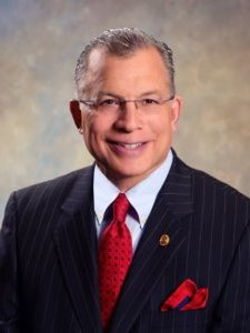
Don Mason, chair of the OneOhio Recovery Foundation Board of Directors, is the mayor of Zanesville. Mason entered politics as a write-in candidate for Zanesville City Council in 1979 and served on the council through 1983, the same year he was elected mayor at age 26. Previously, Mason worked as chief of the Division of Oil and Gas for the Ohio Department of Natural Resources, and as a member of the Hazardous Waste Facilities Board. As ODNR deputy director, Mason supervised the divisions of Parks, Forestry, Watercraft, Natural Areas and Preserves, and Wildlife. Mason has also represented Ohio on the Interstate Oil and Gas Compact Commission and served two terms as a commissioner of the Public Utilities Commission of Ohio. Mason earned a bachelor’s degree in political science from Muskingum University, where he was also the school’s first NCAA All-American wrestler, and later earned his law degree from Capital University.
Mason sees his service on the board as an opportunity to help his often-overlooked part of Ohio: “The most pressing issue in my community is addressing homelessness, mental health and substance abuse issues.”
Alisha Nelson
Executive Director, OneOhio Recovery Foundation

Alisha Nelson is the Executive Director of the OneOhio Recovery Foundation. Nelson, a longtime advocate for improved behavioral health services, brings a long career of public- and private-sector experience to the OneOhio Recovery Foundation Board. Nelson most recently served for nearly two years as Director of Behavioral Health Strategy for one of Ohio’s Medicaid managed care organizations and previously served as director of RecoveryOhio in Governor Mike DeWine’s office where she was responsible for overseeing mental health and addiction-related work across 17 state agencies, boards and commissions. Prior to joining Governor DeWine’s cabinet, Nelson served in the Ohio Attorney General’s Office where she offered statewide technical assistance to communities fighting the opioid epidemic at a time when Ohio had one of the nation’s highest unintentional drug overdose death rates. In the AG’s office, Nelson helped host the “Ideas that Work: Fighting the Drug Epidemic in Ohio” statewide emergency meeting that targeted the state’s more than 950 law enforcement entities, along with dozens of community leaders and directors from fifty Alcohol, Drug and Mental Health Boards. Nelson holds a bachelor’s degree in strategic communication from The Ohio State University and a master’s degree in business administration from Ohio Dominican University. A native of Akron, Nelson now lives in Central Ohio with her husband and three children.
As OneOhio’s Executive Director, Nelson is committed to improving support for all Ohioans impacted by mental illness and substance use disorders.
Jonathan Board
Executive Director, West Virginia First Foundation
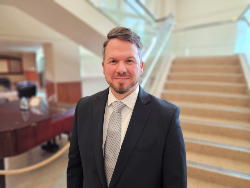
Jonathan Board holds a Doctor of Jurisprudence from West Virginia University College of Law and a Bachelor of Science from Fairmont State University. He is a well-published author on topics including public health, alternative dispute resolution, and historical legal theory. He has served as a policy advisor for state and federal agencies, providing research and legislative authorship to enhance interoperability, access to care, and technology governance. His consultancy work in health policy spans the Veterans Health Administration, Department of Defense, CMS Innovation Center, and the Government Oversight and Accountability Office. Recently, he held roles as Director of Public Policy for Mon Health System and Vice President of External Affairs for Vandalia Health, before being appointed by Attorney General Patrick Morrisey in March 2024 as Executive Director of the West Virginia First Foundation.
Bill Evans
Keough Hesburgh Professor of Economics and Co-Founder of the Wilson Sheehan Lab for Economic Opportunities (LEO), University of Notre Dame

In 2007, Bill Evans joined the Department of Economics at Notre Dame as the university’s first Keough-Hesburgh Professor. This professorship was designed to attract leading scholars to Notre Dame to contribute to both the academic life as well as the Catholic mission of the university. He received his undergraduate degree from Wake Forest University and his PhD in economics from Duke University. His research covers a broad range of areas including health economics and the economics of education. His work has appeared in the top journals in the economics profession and his research is routinely covered by the popular press. He had his colleague Ethan Lieber have written extensively about the opioid crisis. In 2013, Bill and his colleague Jim Sullivan started the Wilson Sheehan Lab for Economic Opportunities, a research center devoted to finding evidenced-based solutions to poverty. He and his wife Eileen have three boys Conor (ND 2012), Brendan (ND 2015), and Patrick (ND 2019).
Steve Williams
Mayor of Huntington, West Virginia

Steve Williams was elected mayor of Huntington, West Virginia, in November 2012, re-elected in November 2016 and again in November 2020 to become Huntington’s first three-term mayor.
Since taking office, he has utilized his diverse background in economic development, finance, state government and local governments to shepherd a renaissance in Huntington that has not been seen in decades.
Huntington also has gained recognition as the “city of solutions” for innovative programs to address the opioid epidemic. This includes the formation of a Crisis Intervention Team that pairs mental health professionals with police officers to assist individuals suffering from a mental health crisis and/or substance use disorder. The City of Huntington also was one of 9 cities in 2018 named as a winner of Bloomberg Philanthropies’ Mayors Challenge for its Compass Center, an innovative program that assists first responders with combatting compassion fatigue as a result of the opioid epidemic.
Williams is past president and current board member of the West Virginia Municipal League. He also serves on the Board of Directors for the National League of Cities and the U.S. Conference of Mayors.
Mark Phillips
CEO, Catholic Charities West Virginia
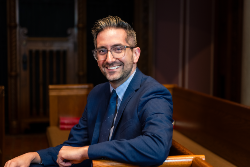
Mark Phillips is the President and CEO of Catholic Charities West Virginia, the largest non-profit social services agency in West Virginia. He joined Catholic Charities WV in 2019 as Northern Regional Director before being promoted to Chief Operating Officer in March 2022 and Chief Executive Officer in May 2023.
Prior to joining Catholic Charities West Virginia, Phillips served as the Vice President for External Relations and Chief of Staff to two Presidents at Wheeling Jesuit University from 2012-2018. From 2007-2012, Phillips managed operations at Family Resources, a Pittsburgh-based non-profit focused on the prevention and treatment of child abuse.
Having lost his younger sister, Angela, to an overdose in 2016, Phillips considers the opportunity to work with the marginalized as a mission and a calling. Along with his work at CCWVa, Phillips has worked with young people in foster care through CASA for Children and as Catechesis Coordinator for his parish, St. Michael’s. He is married to Dr. Amy Criniti Phillips and has one child, Benjamin (12). Phillips was raised in southwestern Pennsylvania and received a BA at St. Vincent College and an MA at Duquesne University.
Heather Reynolds
Michael L. Smith Managing Director, LEO, University of Notre Dame
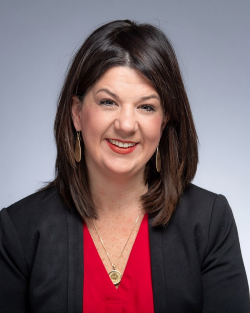
Heather Reynolds is the Michael L. Smith Managing Director of the Wilson Sheehan Lab for Economic Opportunities (LEO)—an anti-poverty research lab at the University of Notre Dame. Heather is an expert speaker on poverty and nonprofit strategy, and she served as the CEO of Catholic Charities Fort Worth for 14 years before joining the LEO team.
Inspired by Notre Dame’s vision to be a force for good in the world, Heather leads LEO to be that vision in action as the lab works to reduce poverty through evidence-based programs and policies. From her years in the field as a service provider, Heather knows first-hand the challenge of serving people without evidence of what is most effective for helping them escape poverty. Being at LEO gives her the chance to ease this challenge for others, helping social service organizations pair their work with passionate academic researchers at Notre Dame, allowing them to discover, prove, and scale their impact.
Heather received her BA in Social Work from Texas Christian University, her MS in Social Work from the University of Texas at Arlington, and her Executive MBA from Texas Christian University.
Rachel Fulcher Dawson
Senior Associate Director of Policy & Impact, LEO, University of Notre Dame

Rachel oversees the LEO dissemination team, which focuses on sharing our research results and information to everyone who can benefit from it—providers in the field, researchers, policymakers, and funders. Rachel received her BA in Political Science from Marquette University, her MA in Public Policy and Management from the University of Maryland, and her PhD in Education Policy from Michigan State University. Before joining the LEO team, Rachel consulted with nonprofits, schools, and state governments and worked for the federal government at the Department of Education and on Capitol Hill. At Notre Dame, she’s a Concurrent Adjunct Professor in the Education, Schooling, and Society program and is an Affiliate of the Institution for Educational Initiatives (IEI). Rachel is also an Affiliate of Notre Dame’s Program for Interdisciplinary Education Research (PIER).
Zachary Markovits
Vice President and Local Practice Lead, Results for America

Zachary Markovits is the Vice President and Local Practice Lead at Results for America, where he is focused on helping all local governments use data and evidence to make real, and more equitable change in the lives of residents. He joined Results for America (RFA) in 2015 to help launch the What Works Cities initiative and now oversees or coordinates all RFA’s work with cities, counties, and regional programs. Before joining RFA, he did leading work on state and local policy at the Pew Charitable Trusts, where he worked on election administration reform and led both their elections performance portfolio and their work on the Voting Information Project, the largest open data project on the planet. Previously, he worked out of the University of California’s Survey Research Center and served as a community organizer in the south side of Providence, Rhode Island.
Zachary earned his Master’s in Public Policy from the University of California’s Goldman School of Public Policy and his bachelor's degree from Brown University. He also holds a James Bell Racial Justice & Structural Well-being Certificate from the Haywood Burns Institute.
Patrick Carter
Vice President and State Practice Lead, Results for America
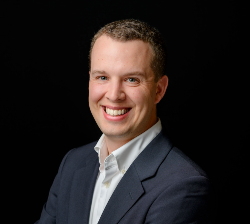
Patrick Carter is Vice President and State Practice Lead at Results for America - a national, nonpartisan nonprofit. Previously, Patrick was the State of Minnesota’s nonpartisan evidence-based policymaking manager where he supported executive branch and legislative decision makers in using data and research to improve outcomes. Patrick also worked for the Minnesota Department of Human Services in policy, performance, and legislative relations roles. Patrick holds a bachelor’s degree from Creighton University and a Master of Public Policy degree from the University of Minnesota.